
Leadership structure redesign
A ground-up review of roles, portfolios and accountabilities. Stripping away inherited assumptions to build something that reflects your mission, your scale and where you are going.
Julia Roberts Advisory
Building leadership structures from purpose, not precedent.
Slow decisions, blurred accountability, talented people spending more time navigating boundaries than delivering progress. Most of these problems aren’t new. They’re structural. And they’ve been there for years.
Most leadership advisory work addresses how people lead. JRA starts earlier: whether the structure they are leading within is the right one. Capability matters. Structure comes first.
Julia Roberts Advisory works with senior leaders in higher education to redesign the structures that are holding their institutions back. Independent insight. Honest challenge. Deep sector knowledge.
We help universities build leadership frameworks that actually serve their mission.
The context
Higher education is operating in a radically different world. Funding is insecure. Fees are stagnant. International recruitment is exposed to global uncertainty and shifting visa policy. Students are framed as consumers. Expectations around translational research are rising. Financial prudence is non-negotiable. Academic freedom is under pressure. Leaders are asked to walk a tightrope between principle, politics, and perception.
In this environment, it is no wonder that senior leaders rarely have the space to pause and ask a fundamental question:
Do our structures still work for us, or against us?
Julia Roberts Advisory exists to create that pause and to turn it into progress. We work with university leaders to redesign leadership and governance structures that are fit for the reality they face now, not the one they inherited. Clear accountability. Better decisions. Structures that enable talent to lead, rather than holding it back.
Independent insight. Honest challenge. Deep sector knowledge.
Because when the structure is right, leadership can do its work.
What I do
Every engagement begins with a clear question: does your leadership structure support your strategy, or work against it? From there, the work takes the shape your institution needs.
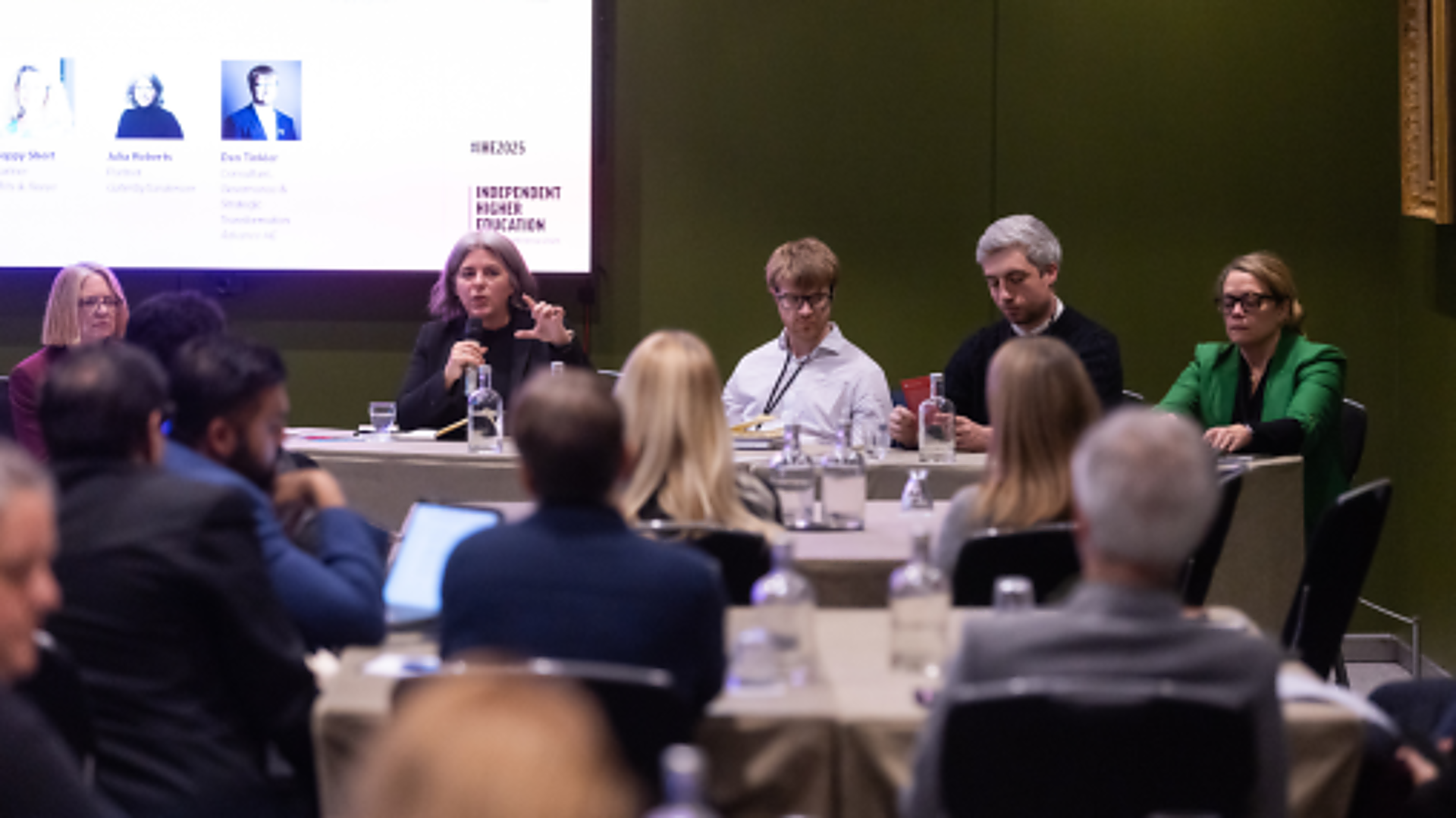
A ground-up review of roles, portfolios and accountabilities. Stripping away inherited assumptions to build something that reflects your mission, your scale and where you are going.
Structured listening programmes with staff, senior leaders, Governors and key stakeholders to surface what the data does not show. A typical programme runs across four to six weeks and combines one-to-one conversations, small group sessions and a final synthesis report. The output is a clear picture of where accountability is blurred, where decisions are stalling and where the unspoken risks sit. It is often the starting point for deeper structural work, and always valuable in its own right.
Support for organisations drafting clear, future-focused job descriptions and person specifications that align with new structures and ways of working. I also act as an independent member on hiring panels, bringing objectivity, rigour and practical experience to ensure roles, criteria and decisions stand up to scrutiny.
About
A career spanning three decades in and around higher education has given me an unusually clear view of a problem that very few people name directly: universities are trying to run modern institutions with leadership structures built for a different era.
I began in senior fundraising roles at UCL, King’s College London and Cranfield before moving into executive search, where I became a Partner and Practice Lead for Education at GatenbySanderson. Across both disciplines, the same pattern kept emerging. The structural conditions inside universities were making it harder for good people to do good work.
That insight led me to establish Julia Roberts Advisory. My work is about redesigning leadership and governance structures from first principles. No inherited assumptions. No cosmetic reshuffles. Clear roles, clean decision-making and structures that stop getting in the way.
I work with Vice-Chancellors who can see the structural problems clearly but lack the bandwidth to tackle them while running a full institution, and with Chief People Officers asked to reshape leadership teams without the capacity to do it well. I bring independent perspective, honest challenge and deep sector knowledge to work that is too important to get wrong.
I also serve as a Governor of Robert Gordon University, which keeps me close to the realities of board-level decision-making and the pressures facing institutional leadership today.
I am a regular contributor to the Higher Education Policy Institute.

What leaders say
Julia’s work and her engagement with various organisations reflects a deeper shift in how we think about leadership across education and the not for profit sector. At a time when we are all navigating profound complexity, the ability to identify, shape and support leadership across the full lifecycle of our organisations is critical. Julia brings not only deep sector expertise and an exceptional network, but a clear commitment to purpose driven leadership and focus on mission to ensure alignment between what we do and people for delivering value that matters.
Director, global business school
Julia’s genuine curiosity about institutions and how we tick means she brings a wealth of experience and sector knowledge, without bringing assumptions. Great to work with.
Julia understands universities from the inside. That credibility, combined with the independence of an external adviser, is a powerful combination.
Julia will tell you what you need to hear, not what you want to hear. That is why I value her advice.
She has an unusual gift for seeing structural problems that have become invisible to the people living inside them. The clarity she brought to our leadership review was striking.
Insight
Original pieces from JRA alongside published thinking in the Higher Education Policy Institute.
Most structural change in universities starts in the wrong place. A leader leaves, a review is commissioned, a consultant is hired. But the org chart is rarely where the problem lives.
Before you move anything, ask these four questions.
Is your structure linked to your strategy?
Not in theory. In practice. Can you trace a direct line from your current strategic priorities to the way leadership accountability is currently distributed? If the answer is unclear, the structure is probably working against you.
Do your key strategic initiatives align to leadership portfolios?
If your most important work sits between portfolios, or belongs to everyone in principle and no one in practice, that is a structural problem. Ownership matters. Ambiguity at the top travels fast.
When did anyone last review the role descriptions?
Roles grow as people grow. By the time a senior leader moves on, the job they were doing is often significantly larger and more complex than the one on paper. Recruiting to an outdated description is one of the most common and costly mistakes in higher education leadership.
Is there a clear framework for collective executive responsibility?
Individual portfolio accountability is necessary. It is not sufficient. Without a shared understanding of where the executive team leads together, decisions stall, gaps open up, and the institution loses coherence at the top.
If any of these questions surface something uncomfortable, that is probably where to start.
Get in touch if you would like to talk through what alignment could look like for your institution.
Julia Roberts Advisory · May 2026
Four-part series
If the questions these pieces raise are live in your institution, I would be glad to talk. Most engagements begin with a single conversation.
Get in touch →Let’s talk
If you are a Vice-Chancellor, Chair, Chief People Officer or senior leader facing a structural challenge, I offer a focused initial conversation of around 45 minutes. No pitch, no obligation. Just a candid discussion about whether the work makes sense.
Most engagements begin exactly that way.